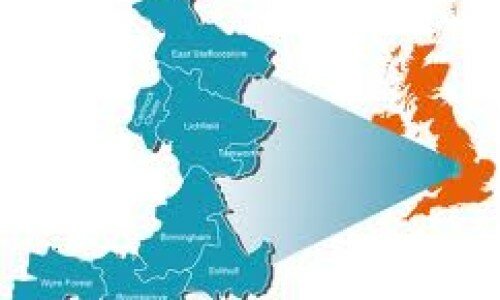
‘Osborne must back down on metro mayors if West Midlands is to get devolution’
Greater Birmingham’s chances of grabbing powers and budgets from Whitehall are likely to depend on persuading George Osborne to perform a dramatic U-turn on metro mayors, writes Paul Dale.
If Mr Osborne sticks rigidly to his , then the West Midlands is surely doomed to suffer centralist control for an eternity.
There are few parts of the country where opposition to elected mayors is more entrenched.
Birmingham has voted twice against the idea, Coventry also rejected a mayor in the 2012 referendum. The Black Country councils are against having a mayor, as is Tory Solihull.
Change doesn’t come easily in this part of the world. Discussions about forming a Birmingham, Black Country and Solihull combined authority have been going on for at least three years – to throw an elected mayor into the equation now would probably wreck the entire project.
Birmingham city council’s strategy appears to be to welcome Mr Osborne’s Localism Bill, which will set out a framework for devolution, and to hope that somehow the mayoral issue can be worked around to the advantage of Greater Birmingham.
When push comes to shove, perhaps, Mr Osborne will not sacrifice the benefits from devolution that would flow for the multi-billion pound economy of the West Midlands on the altar of metro mayors. Then again, perhaps he will.
Some councils in the north have had a change of heart since the chancellor made his unexpected declaration after the General Election, when he said he didn’t want to impose mayors on cities but he “wouldn’t settle for less” from local authorities wanting devolution.
According to think tank, leaders in West Yorkshire and Liverpool City Region have both responded to the speech by opening up room for a debate on metro mayors that would allow them to start talking to the Chancellor, and potentially take him up on his offer.
Cllr David Green, leader of Bradford, said that “the world changed” when Mr Osborne made his speech, and long-time , Cllr Peter Box of Wakefield, plans to “consult the local people, businesses and stakeholders of West Yorkshire and York on the governance options that could unlock extra powers and resources from Whitehall.”
In Liverpool City Region, where Mayor Joe Anderson has been an advocate of a metro mayor since the combined authority’s inception, his fellow leaders have now said that while they may personally oppose a metro mayor deal, they would be willing to put any deal to a referendum.
Cllr Phil Davies, leader of Wirral Council and the Liverpool City Region said that he was “very uncomfortable with the six of us [council leaders] sitting in a room saying we will just make that change” and that the people of the region should have the final decision.
In Bristol, directly elected Mayor George accepts that the Treasury won’t even begin discussions on new powers until Bristol and its neighbours form a combined authority. While Mayor Ferguson is set on the idea of a mayor, the regional structures aren’t in place to allow any negotiations to start.
John Mothersole, chief executive of Sheffield City Council has over the past few months been careful to say that the region never took a formal decision to oppose a metro mayor. Sheffield, he says, is “open-minded… Nothing is ruled out, nothing is ruled in.” With the structures in place, Sheffield City Region is ready to move forward with negotiations if it so wishes.
The North East councils largely remain opposed to a mayor and have indicated that Mr Osborne’s stubbornness over the issue could derail devolution completely.
Newcastle council leader Nick Forbes said that “great potential and opportunities here… could be stifled if [the chancellor] rigidly insists on a directly elected mayoral model” and he was in agreement with Cllr Paul Watson of Sunderland and Cllr Simon Henig of County Durham who questioned the viability of a mayor to govern an area about 100 miles wide.
But while the Newcastle leader sees drawbacks to the mayoral model, he did open the door slightly to the chancellor’s proposals when he told Local Government Chronicle that “we have made it clear in the North East we are open to exploring a range of options. The Greater Manchester model is one I know we will look at and explore whether it would be right for us.”
Meanwhile, in the West Midlands, even forming a combined authority is not without its difficulties.
has reported Solihull council leader Bob Sleigh saying that “we have a strong economy and growth plans in Solihull and the issue for us is, if we get into a Midland Powerhouse, what can we achieve as an authority which we can’t already?” It would appear however that Cllr Sleigh has overcome his fears and it is expected that Solihull will confirm today that it intends to join the emerging combined authority.
It is certain then that a Birmingham-Black Country combined authority will be formed very soon. Coventry Council is now also on board with the combined authority proposal, although a decision by the ruling Labour group to join the Greater Birmingham movement has not been without controversy.
Council leader when it comes to discussing the combined authority and if Coventry did not join with Greater Birmingham it would be “squeezed out, isolated and forgotten”.
Not all Labour councillors are in favour though, and the opposition Conservative group is definitely against what it sees as Coventry being sucked into Birmingham.
Reaction via the pages of the has been vehemently against the idea, resurrecting decades of antipathy towards Birmingham.
Meanwhile, North Warwickshire council, another possible member of the Greater Birmingham combine authority, is now under Conservative control, making it less likely that any deal can be done.
The challenge then is to convince Mr Osborne that the West Midlands, and other parts of the country, deserve to have devolved powers even without a metro mayor.
that Mr Osborne can expect opposition to metro mayors from Tory backbenchers, and that this could be a problem given the fragile nature of the Government’s majority in the House of Commons. The appointment of Greg Clark as Communities Secretary could open another avenue for the anti-mayor brigade. But Mr Clark, along with Lord Heseltine, was at the centre of the Government’s attempts to encourage yes votes in the eight big English cities in 2012 – long before he Chancellor’s conversion to the devolution cause.
Given all of the problems that the Government is likely to face, ranging from cutting welfare to renegotiating Britain’s position in the EU, will the Chancellor wish to go to the wall on mayors? Council leaders in the West Midlands will be hoping the answer is no.
Birmingham Chamber of Commerce has urged city leaders to take a pragmatic view and follow the example of Manchester, where councils did not initially want a mayor but changed their mind when they saw the on the table.
Birmingham Chamber president Greg Lowson said:
Now is the time for the component parts of the West Midlands to work together to grab this tremendous opportunity being offered by the Government.
And we urge them to think carefully about the added value of having an elected mayor.
The Chancellor has made it abundantly clear only cities that have an elected mayor will be given control of local transport, housing and skills.
Birmingham’s electorate rejected the idea of an elected mayor for the city alone, as Manchester did, but a mayor could unlock even more resources for a combined authority.
Similar Articles

Police commissioner’s M6 traffic chaos probe raises more questions than answers 3
An attempt by West Midlands police commissioner David Jamieson to find out why a tragic

Rising star slams Labour ‘homophobia’ and says ‘it’s like living in North Korea’ 16
One of Birmingham’s rising political stars has lodged a formal complaint alleging ‘homophobia’ in the

MIPIM16: Greater Birmingham in Paradise after PwC sign up for major office deal 2
The good news just keeps rolling in for Birmingham during MIPIM week. Hot on the heels

Budget16: Chancellor fires up Midlands Engine with cash for growth 7
Metro mayors and combined authorities turned out to be big winners from George Osborne’s budget,

Budget16: Osborne sweetens Budget pill with sugar tax, fuel and alcohol duty frozen 6
George Osborne unveiled a surprise tax on sugary drinks and confirmed that every state school
About Author









Popular
-
 Rising star slams Labour ‘homophobia’ and says ‘it’s like living in North Korea’
-
 Rogers to play key role in national move to merge council and NHS budgets
-
 Heathrow’s loss could be Birmingham’s gain if third runway plan is rejected
-
 Sandwiches, pasties and the Mayfair Hotel – open data reveals council expenses
-
 High speed two ‘won’t be so fast after all’, research study claims
